
LIVING PROFILE
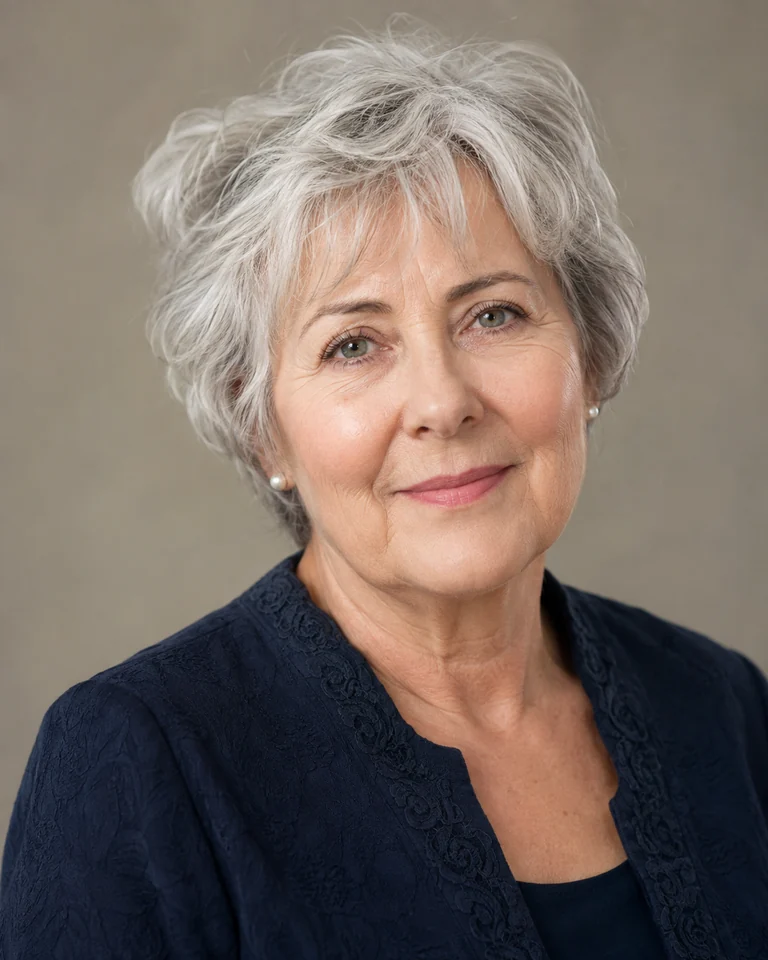
Gražina Paukštienė
School principal
Gražina Paukštienė is a school principal in Tauragė whose professional life has been shaped by the belief that a school is part of a community rather than an isolated institution. She began as a classroom teacher and still thinks first in terms of students: whether a rule can be explained clearly, whether a change wil…
Історія життя
Історія життя
Gražina Paukštienė is a school principal in Tauragė whose professional life has been shaped by the belief that a school is part of a community rather than an isolated institution. She began as a classroom teacher and still thinks first in terms of students: whether a rule can be explained clearly, whether a change will help a child learn, and whether adults are creating an environment in which asking for help is normal. Administrative work added budgets, staffing and regulation to her responsibilities, but she never wanted those tasks to become the whole meaning of the job.
In the classroom Gražina learned that two students can hear the same explanation and need very different kinds of support. That experience made her cautious about simple labels. She encouraged teachers to distinguish between a student who did not understand, one who was afraid to answer, one who was bored and one who was dealing with something outside school. The response should not be identical in each case. She believes good education begins with paying enough attention to notice the difference.
As a principal she became responsible for decisions that rarely have perfect solutions. Schedules, staffing, building maintenance, parent concerns and changing educational requirements all compete for time. Gražina prefers processes where people know how a decision will be made even if they disagree with the result. She documents reasons, invites specific feedback and tries to avoid changing rules without explaining what problem the change is meant to solve.
She is particularly proud of projects that connected students with older residents of Tauragė. Oral-history assignments, local research and intergenerational events gave young people a reason to ask relatives questions they might otherwise postpone. Gražina noticed that students often became more interested in national history after discovering a concrete family connection to a place, profession or event. She came to see family stories as a bridge between formal education and personal responsibility for memory.
Gražina keeps folders of school photographs, programs, student publications and letters from former pupils. She knows that institutions cannot preserve everything, so she tries to select material that shows how school life felt during a particular period. A photograph of a renovated classroom may be less revealing than a handwritten poster, a sports-day list or a group picture where someone can still identify every student by name.
Her own family archive has grown gradually. She records recipes, scans photographs and asks relatives about people whose names are missing. She has learned not to delay those questions. Information that seems obvious to one generation can become impossible to reconstruct later. When an answer is uncertain, she marks it as uncertain rather than converting a guess into a fact through repetition.
Outside school she enjoys gardening, concerts, long walks and hosting family meals where several conversations happen at once. She likes practical routines and is usually the person who remembers to bring extra copies, spare pens or something for a guest who arrived without warning. Friends describe this as organization; Gražina sees it as hospitality. Preparation creates room for people to relax.
Her view of digital tools is similar. Technology is useful when it reduces friction, improves access or preserves knowledge, but it should not become a barrier for people who are less confident with it. She supports clear interfaces, readable text and alternatives when a process is unnecessarily difficult. In a family archive, she wants older relatives to be able to contribute stories without needing to understand the technical structure behind the service.
Gražina hopes her profile will eventually contain memories from students, colleagues and relatives as well as her own account. She knows that leadership can look different depending on where a person stood. A teacher may remember a policy discussion, a student may remember one sentence after class, and a relative may remember that she was always correcting punctuation at the kitchen table. She considers all of those perspectives part of the same life.
Showcase note: this is a fictional Kinelio demonstration profile. The biography and personal details in this showcase record are synthetic and are used only to demonstrate the structure, privacy controls and public presentation of a complete living profile.