
LIVING PROFILE
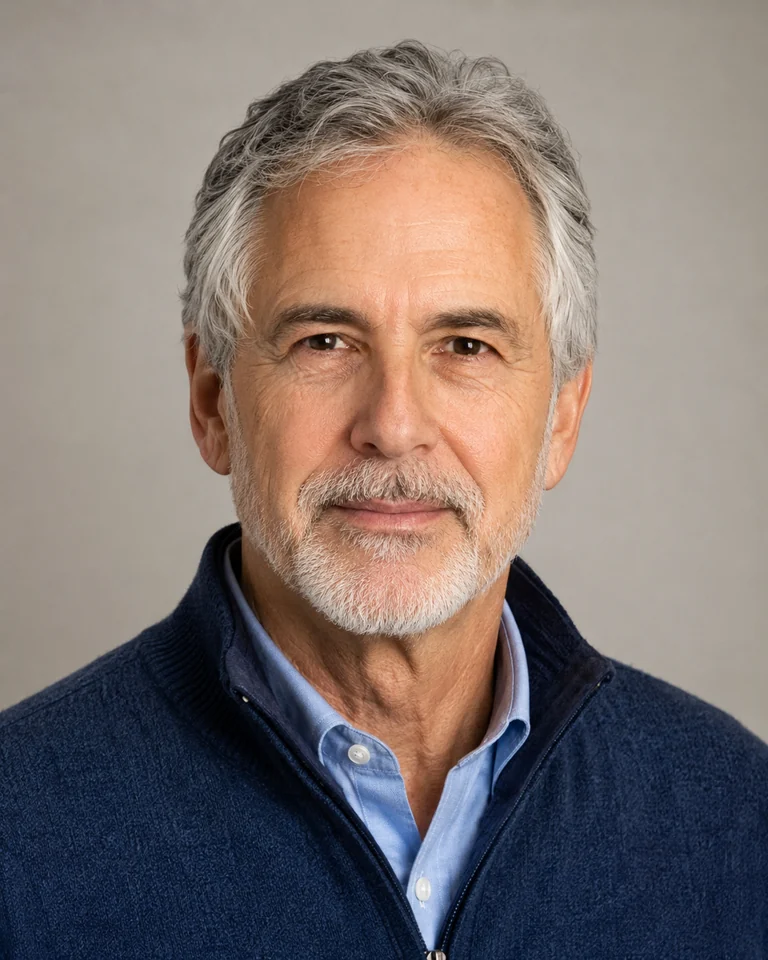
Arūnas Noreika
Public transport planner
Arūnas Noreika is a public transport planner in Vilnius who has spent years thinking about journeys most people experience only as part of the background of a day. A bus arriving five minutes earlier, a safer transfer or a clearer stop can change whether someone reaches work on time, whether an older passenger feels c…
Історія життя
Історія життя
Arūnas Noreika is a public transport planner in Vilnius who has spent years thinking about journeys most people experience only as part of the background of a day. A bus arriving five minutes earlier, a safer transfer or a clearer stop can change whether someone reaches work on time, whether an older passenger feels confident traveling alone, or whether a family decides it can manage without a second car. Arūnas became interested in transport because small operational decisions can affect thousands of people without those people ever knowing who made them.
He studied planning and statistics, but his understanding of transport developed through observation. Timetables may look logical on a screen while failing in rain, traffic or crowded boarding conditions. Early in his career he spent many hours riding routes, counting passengers and speaking with drivers. He learned to compare data with lived experience. Numbers can reveal where a delay occurs, but a driver may explain that the real cause is a difficult turn, a poorly placed stop or an unrealistic transfer assumption.
Arūnas enjoys problems that require balancing competing needs. A direct route is convenient for some passengers but may leave another neighborhood with weak coverage. More frequent service improves waiting times but requires vehicles and staff. He tries to make trade-offs visible rather than hide them behind technical language. In public meetings he prefers showing a map and explaining consequences clearly, even when the final decision will disappoint part of the audience.
Accessibility has become central to his work. He pays attention to walking distance, curb design, shelter, lighting, information displays and the time allowed for transfers. He believes public transport should be understandable to someone using it for the first time, not only to regular passengers who have memorized unwritten rules. When a system is clear for visitors, older people and people with disabilities, it is usually clearer for everyone.
His relationship with Vilnius is mapped through routes rather than districts. He remembers where lines used to turn, which stops were renamed and how new neighborhoods changed demand. Arūnas keeps old network maps because they show the growth of the city in a form that is immediately practical. A line appearing or disappearing tells a story about housing, employment, schools and the assumptions planners made at a particular time.
At home, he enjoys walking, history books and family conversations that begin with a place. An old photograph of a street can lead to a discussion about who lived nearby, how people traveled, where they worked and what was considered far away at the time. Arūnas has started adding maps to the family archive because locations often connect memories that otherwise seem unrelated.
He is careful about preserving professional material without confusing it with official records that belong to an institution. Personal notes, published maps and photographs can illustrate his career, while confidential operational information must remain outside a personal archive. This distinction matters to him. A good legacy record should be informative without violating the responsibilities a person had during their working life.
Arūnas appreciates technology when it helps people make a decision quickly. Real-time arrival information, accessible route planning and open data can make a transport system easier to trust. He is less impressed by features that add complexity without improving the journey. The same principle guides his personal archiving: information should be organized around what a future reader needs to understand, not around how many fields a system can store.
When he thinks about what should remain after a lifetime of planning, Arūnas returns to the idea of connection. Public transport works because individual journeys share infrastructure. Families work in a different way, but they also depend on connections that can become invisible if nobody records them. He wants future relatives to be able to follow those lines: who lived where, who helped whom, which places mattered and how one generation's choices shaped the options available to the next.
Showcase note: this is a fictional Kinelio demonstration profile. The biography and personal details in this showcase record are synthetic and are used only to demonstrate the structure, privacy controls and public presentation of a complete living profile.