
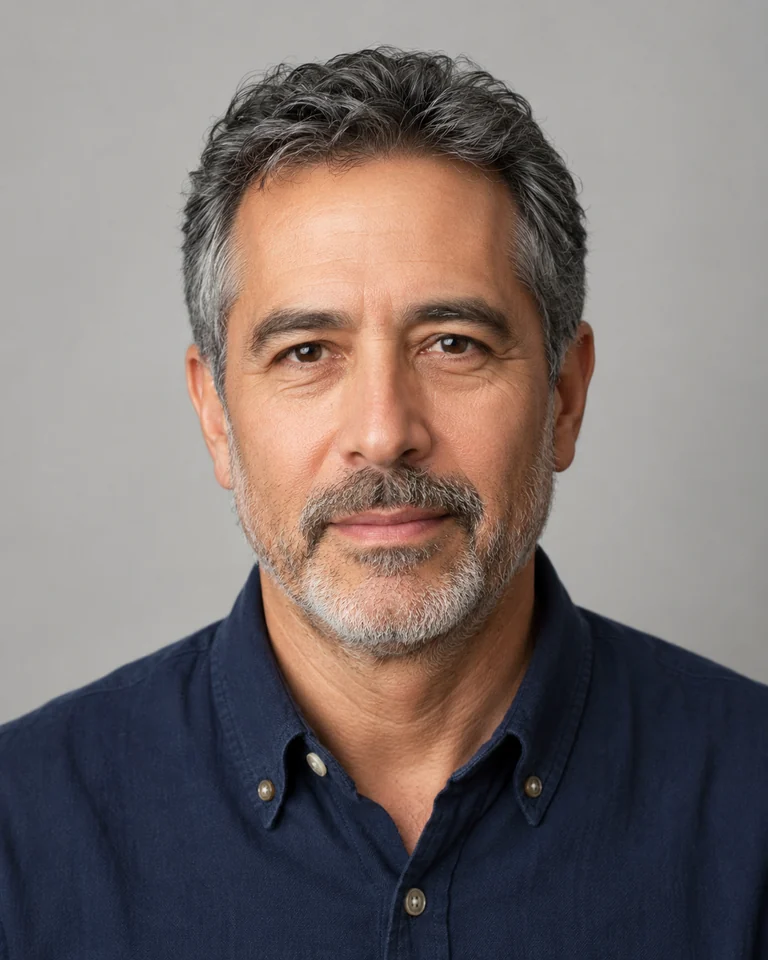
LIVING PROFILE
Gintaras Balčiūnas
Construction manager
Gintaras Balčiūnas has spent most of his adult life in Kaunas, a city he describes through streets, courtyards, construction sites and the people who keep them working. He grew up in a practical household where fixing something was usually preferred to replacing it. As a teenager he became interested in the way buildi…
Life story
Life story
Gintaras Balčiūnas has spent most of his adult life in Kaunas, a city he describes through streets, courtyards, construction sites and the people who keep them working. He grew up in a practical household where fixing something was usually preferred to replacing it. As a teenager he became interested in the way buildings change a neighborhood: not only through their shape, but through the routines they make possible. A new staircase can make an old home usable again; a better entrance can make a public building feel less intimidating; a carefully planned renovation can preserve the character of a place while making it safer for the next generation.
His professional path developed through technical training and years of hands-on work before he moved into construction management. Early jobs taught him to read plans, understand materials and listen to specialists whose expertise was different from his own. Later, when he began coordinating larger teams, he found that the most difficult part of the work was rarely a single technical problem. It was aligning deadlines, safety, budgets, subcontractors, residents and clients without allowing any one pressure to erase the purpose of the project. He became known for keeping detailed notes and for walking a site before meetings so that decisions stayed connected to what was actually happening on the ground.
Gintaras values the quiet competence of tradespeople. He can talk for a long time about concrete curing, drainage, insulation or the difference between a drawing that looks convincing and a detail that can really be built. At the same time, he believes a manager should never pretend to know more than the person doing a specialized job. His preferred approach is to ask specific questions, compare options and make responsibility clear. Colleagues remember that he was willing to stop work when something looked unsafe, even when the schedule was tight. For him, finishing quickly never justified leaving a problem for someone else to discover years later.
Outside work, he is drawn to practical forms of community life. He has helped neighbors organize repairs in shared buildings, explained renovation estimates to older residents and volunteered advice when local groups were trying to make public spaces more accessible. He enjoys seeing a neglected place return to use, especially when the improvement is modest rather than spectacular. A repaired bench, better lighting or a dry basement may never appear in an architectural magazine, but he considers these changes meaningful because people notice them every day.
Family life has given Gintaras another perspective on permanence. He keeps photographs of relatives, handwritten notes, old tools and small objects whose value comes from the story attached to them. He is not especially sentimental in conversation, yet he rarely throws away something that carries a clear family memory. He likes telling younger relatives where an object came from, who used it and why it mattered. He believes memory becomes more durable when it is connected to ordinary details rather than only to anniversaries and formal occasions.
In recent years he has become more interested in documenting projects and personal history digitally. Construction taught him the importance of records: photographs before walls are closed, clear versions of drawings, dates, decisions and explanations. He applies the same instinct to family archives. He scans photographs, adds names and places when he knows them, and asks relatives to describe events before the context disappears. He prefers simple systems that can be understood by another person without special software or instructions.
Gintaras is happiest when a day contains a visible result. It might be a solved site problem, a finished repair at home, a long walk through Kaunas or a meal with relatives after everyone has been busy. He enjoys conversations with people who know their craft and has little patience for unnecessary status. He respects reliability, directness and the willingness to admit a mistake early enough to correct it. These values have shaped both his working style and the way he approaches relationships.
When he thinks about legacy, he does not imagine a monument. He thinks about whether the people who worked with him felt treated fairly, whether the buildings he helped deliver remain useful, and whether younger relatives understand something about the lives that came before them. He would like his own record to contain the texture of real life: work that was difficult, decisions that changed, jokes that only made sense in a particular room, photographs with imperfect lighting, and stories told by several people rather than a polished summary written at the end.
He sees Kinelio as a place where those details can be kept together. A profile can hold the practical facts of a life, but it can also preserve the explanations that usually disappear first: why a place mattered, how someone learned a skill, what they believed about work, and which family stories were repeated for decades. For Gintaras, that kind of archive is useful precisely because it is not grand. It gives future relatives enough context to recognize a person rather than only a name and a date.
Showcase note: this is a fictional Kinelio demonstration profile. The biography and personal details in this showcase record are synthetic and are used only to demonstrate the structure, privacy controls and public presentation of a complete living profile.