
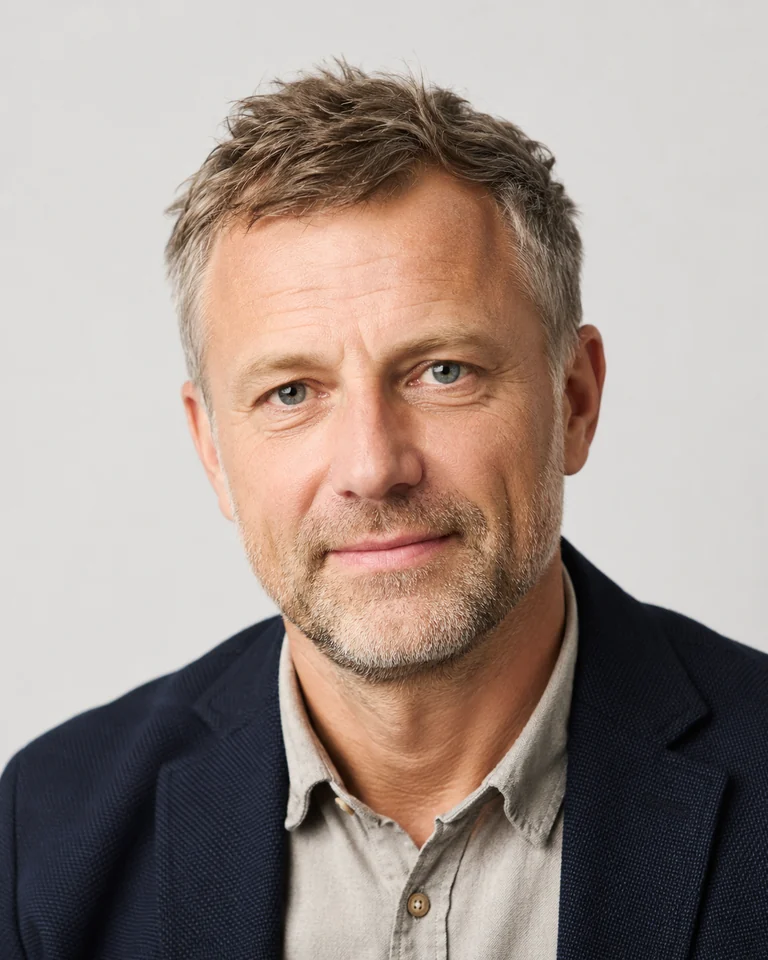
PROFIL EINER LEBENDEN PERSON
Paulius Navickas
IT systems administrator
Paulius Navickas is an IT systems administrator from Jonava who has spent much of his career making technology less visible. He considers a good system successful when people can do their work without thinking about servers, backups, permissions or network paths. His interest in computers began with curiosity about ho…
Lebensgeschichte
Lebensgeschichte
Paulius Navickas is an IT systems administrator from Jonava who has spent much of his career making technology less visible. He considers a good system successful when people can do their work without thinking about servers, backups, permissions or network paths. His interest in computers began with curiosity about how separate parts fit together. He enjoyed taking machines apart, installing operating systems and discovering that many apparently mysterious failures could be understood by following a sequence of causes patiently.
His early jobs involved desktop support and small-office networks, where technical work was inseparable from communication. A person reporting that “the computer is broken” might be describing a network outage, a forgotten password, a printer queue or an application behaving differently after an update. Paulius learned to ask questions without making people feel foolish. He believes support work is partly translation: converting frustration into enough detail to isolate a problem, then explaining the solution in language that allows the person to continue confidently.
As his responsibilities grew, he became more focused on reliability and recovery. Hardware eventually fails, people make mistakes and software changes. The important question is whether a system is designed to recover without panic. Paulius became strict about tested backups, documented procedures and access controls. He dislikes the phrase “we have a backup” unless someone can also explain when it was last restored successfully. For him, resilience is a practice rather than a checkbox.
Security is another area where he prefers practical habits to dramatic language. He encourages unique passwords, limited privileges, prompt updates and clear ownership of accounts. He is suspicious of systems that depend on one person remembering undocumented details. When he inherits an environment, one of his first tasks is usually to identify hidden dependencies and write down what would be needed if the current administrator were unexpectedly unavailable.
Living in Jonava has kept Paulius connected to a community smaller than the systems he sometimes manages. He likes the contrast. Work may involve remote infrastructure and abstract services, while daily life includes familiar streets, neighbors and family routines. He enjoys cycling, repairing electronics and helping relatives with technology when the solution can be made sustainable. He would rather configure a reliable photo backup once than recover the same lost photographs repeatedly.
That experience has shaped how he approaches family memory. Paulius has seen how easily years of photographs can disappear with a failed drive or an abandoned online account. He has helped relatives consolidate collections, remove obvious duplicates and add basic descriptions. He does not try to organize every image perfectly. His priority is to keep important material in formats and locations that another person can access later without knowing the history of every device.
He is also aware that digital preservation can conflict with privacy. A family archive may contain documents or messages that should not automatically become public. Paulius favors layered access: public information for what a person intentionally shares, family material for trusted relatives and private records for the owner. He appreciates systems that make these boundaries explicit instead of assuming that everything online is either completely public or completely hidden.
At work, Paulius is known for writing short runbooks after difficult incidents. He records what happened, what evidence mattered, how the service was restored and what should change to prevent a repeat. He sees value in the same approach to personal stories. Significant events are easier to understand later when someone records not only the outcome but also the circumstances, decisions and uncertainties that surrounded it.
Paulius would like his long-term digital record to be understandable without requiring a specialist. He wants photographs, stories and important milestones to remain readable through ordinary tools, while technical complexity stays behind the scenes. If future relatives remember him as someone who made complicated things calmer and more dependable, he would consider that an accurate description of both his profession and his temperament.
Showcase note: this is a fictional Kinelio demonstration profile. The biography and personal details in this showcase record are synthetic and are used only to demonstrate the structure, privacy controls and public presentation of a complete living profile.